Paying Zakat is only half the duty — it must also reach the right recipients. Giving Zakat to someone who does not qualify may mean your obligation is not discharged. So who is actually eligible? The Qur'an settles the matter precisely. This guide explains the 8 categories of Zakat eligibility with practical examples from India.
The Qur'anic basis
Allah says in Surah At-Tawbah (9:60) that Zakat (sadaqat) is for eight specific groups. This verse is the foundation of all Zakat distribution and leaves no room for guesswork.
The 8 categories explained
1. The poor (Al-Fuqara)
Those with little or no income who cannot meet their basic needs. In India this includes daily-wage families whose earnings vanish the moment work stops.
2. The needy (Al-Masakin)
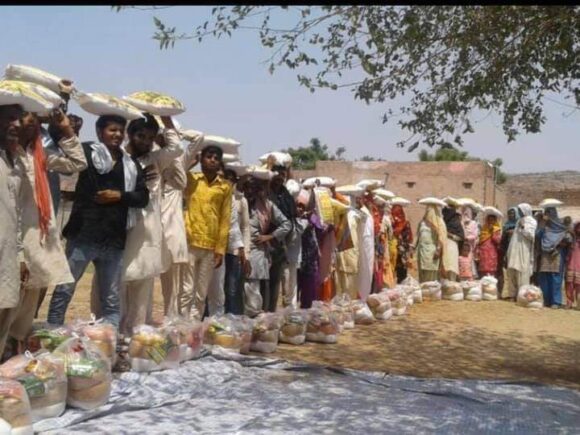
Those in hardship whose income does not cover essentials like food, medicine or rent. Wafa's ration kit programme serves many such households.
3. Zakat administrators (Al-Amilin)
Those appointed to collect and distribute Zakat may be paid from it for their work, ensuring the system runs honestly and efficiently.
4. Those whose hearts are to be reconciled (Al-Mu'allafah)
New Muslims or those inclined towards Islam who may be supported to strengthen their faith and standing.
5. Freeing those in bondage (Ar-Riqab)
Historically for freeing slaves; today applied to freeing people from unjust captivity, bonded labour and similar oppression.
6. Those in debt (Al-Gharimin)
People crushed by debt they cannot repay — for medical bills, essential needs, or a failed livelihood — may receive Zakat to clear it.
7. In the cause of Allah (Fi Sabilillah)
Efforts that serve the community and faith, understood by many scholars to include Islamic education and welfare work such as Maktab Deeniyat.
8. The stranded traveller (Ibn as-Sabil)
A traveller cut off from their wealth who needs help to reach home, even if they are wealthy back home.
Who is NOT eligible?
Zakat generally cannot be given to your own dependants you are already obliged to support (such as your spouse, children or parents), nor to the wealthy who are above nisab, nor — in the majority view — used to construct buildings. For families you support directly, and for mosques and madrasas, use general Sadaqah or Lillah instead.
Real examples from Nuh, Haryana
On the ground, eligibility becomes very real: a widow with no earning member, a family drowning in a medical debt, a labourer whose home was washed away. Wafa Educational And Charitable Trust verifies each case locally so your Zakat reaches a genuinely eligible recipient — not a middleman.
Give your Zakat where it qualifies
Because we work directly in the community, we can identify and confirm the poor and needy, the indebted and the stranded, and deliver your Zakat to them quickly and transparently. Fulfil your Zakat knowing it lands exactly where the Qur'an intends — in the hands of those who have a right to it.
Frequently Asked Questions
How many categories can receive Zakat?
Eight categories are named in the Qur’an (Surah At-Tawbah 9:60): the poor, the needy, Zakat administrators, those whose hearts are reconciled, freeing captives, the debt-ridden, in the cause of Allah, and the stranded traveller.
Can Zakat be given to build a mosque?
The majority view is that Zakat must reach eligible individuals and therefore cannot generally be used for mosque construction. Use Lillah or general Sadaqah for buildings instead.
Can Zakat be given to non-Muslims?
Zakat is primarily for eligible Muslims, though the category of "those whose hearts are to be reconciled" has some scope. For everyday poverty relief, general Sadaqah can be given to anyone in need.
Turn this into action
Your Zakat, Sadaqah or Lillah reaches verified families in Nuh, Haryana and across India — quickly, transparently and with a receipt. Give today and become the reason for someone's relief.